
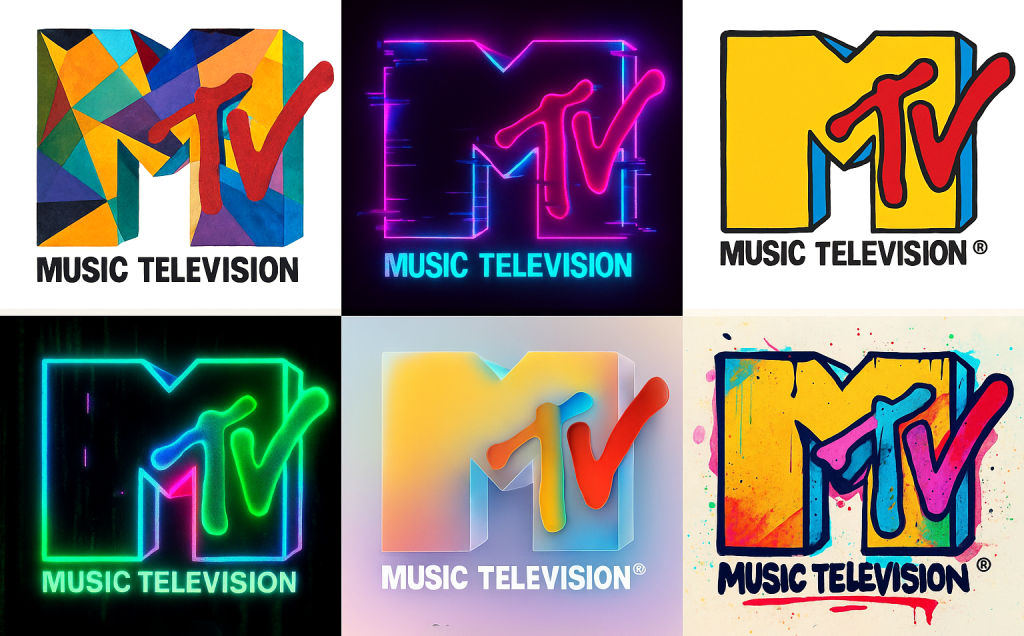
When I was 15 years old, MTV wasn’t just a television channel—it was the cultural heartbeat of my teenage years. I was passionate about the video clips, spending hours glued to the screen, waiting for my favorite ones to play. Sometimes I would wait an entire afternoon just to catch that one music video I loved.
Today, my updated version of MTV is Spotify—less glamorous, perhaps, without the flashy VJs and surreal logo animations, but with the extraordinary advantage of being on demand. What once took hours of waiting is now just one click away. Of course, that era of music video production, with all its magic, has largely come to an end.
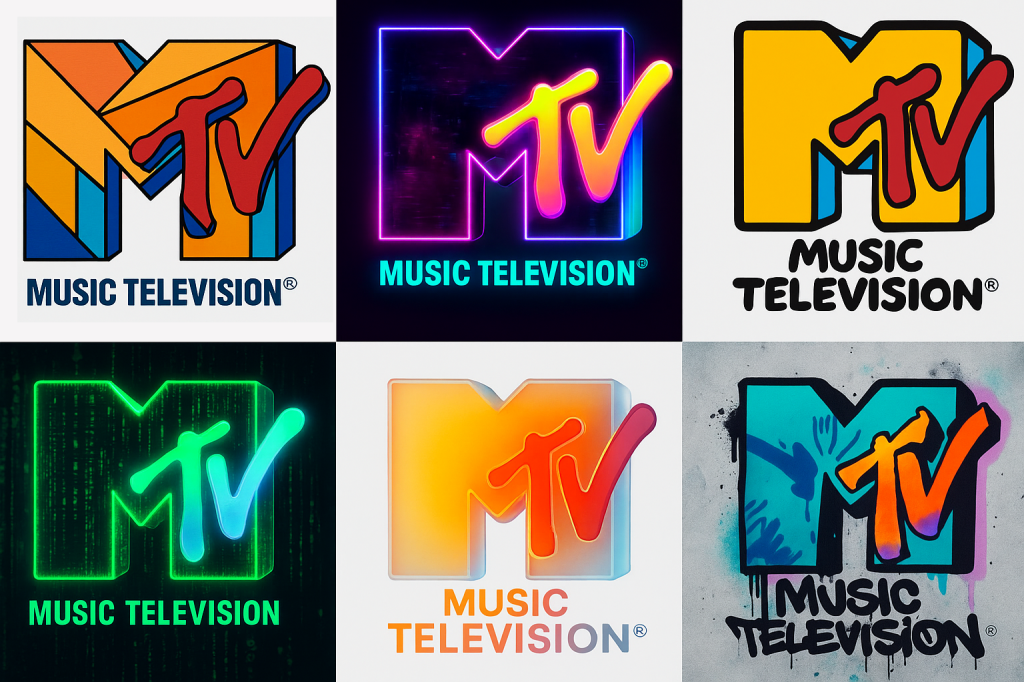
But back then, it wasn’t just the music that captivated me—it was the logo. The bold, blocky “M” paired with the contrasting, scribbled “TV” wasn’t a logo in the traditional sense. It was a playground of creativity for motion graphics designers, giving them permission to experiment wildly. The MTV logo was alive: it shifted, morphed, exploded, melted, and took on 10,001 versions—each a new surprise. It wasn’t just design, it was motion and mutation, a constant transformation that mirrored the restless spirit of pop culture. Every time I saw a version I had never seen before, it felt like magic.
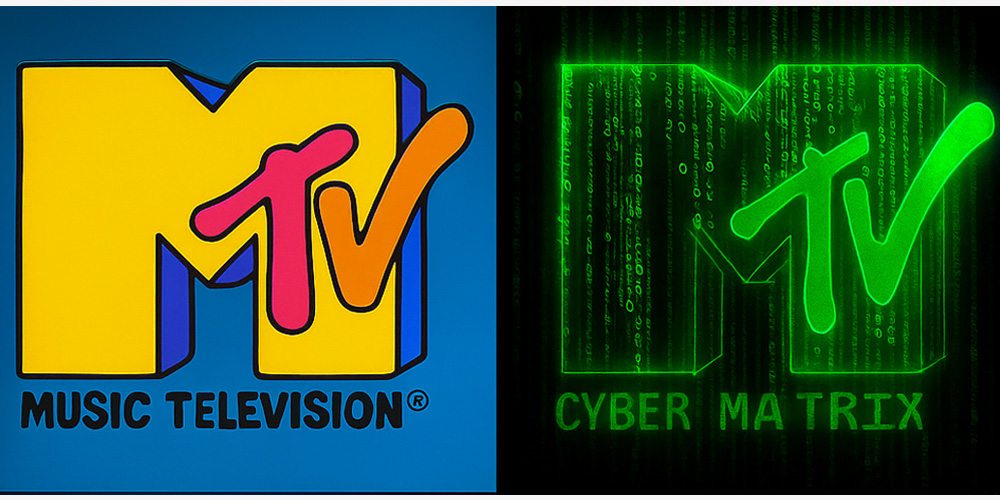
The cultural impact of MTV was enormous. It changed how we consumed music, transforming videos into an art form and artists into icons. It was fashion, attitude, rebellion, and identity all broadcast into our living rooms. Even if MTV was born in the early 80s, my personal experience was rooted in the 90s—a time when the channel was still at its peak influence. For teenagers like me, MTV wasn’t just a channel; it was a window into a global youth culture.
From a design perspective, MTV broke the rules. Brands at the time aimed for consistency, but MTV embraced chaos. The logo became a canvas, not a stamp. Each variation carried a different visual language—sometimes playful, sometimes edgy, sometimes surreal—but always unmistakably MTV. It was a design philosophy ahead of its time, one that reflected the idea that identity could be fluid, adaptive, and ever-changing.
Looking back, I realize that’s what made MTV so revolutionary. The logo wasn’t just branding—it was storytelling, capturing the rebellious creativity of the 80s and 90s.
MTV taught me that music and design weren’t separate—they were inseparable parts of the same cultural force. And to this day, I wish I had had the chance to be part of MTV’s legendary motion graphics team, contributing to that ever-evolving visual universe.
 Design Journal