
There are things we love so much we keep them in a special drawer of memory, and Swatch watches are one of those for me.
It came back to me while watching a TV report on the latest Swatch launch: a pocket watch made with Audemars Piguet. People queued in a frenzy usually reserved for Black Friday. That image alone opened my little memory drawer.
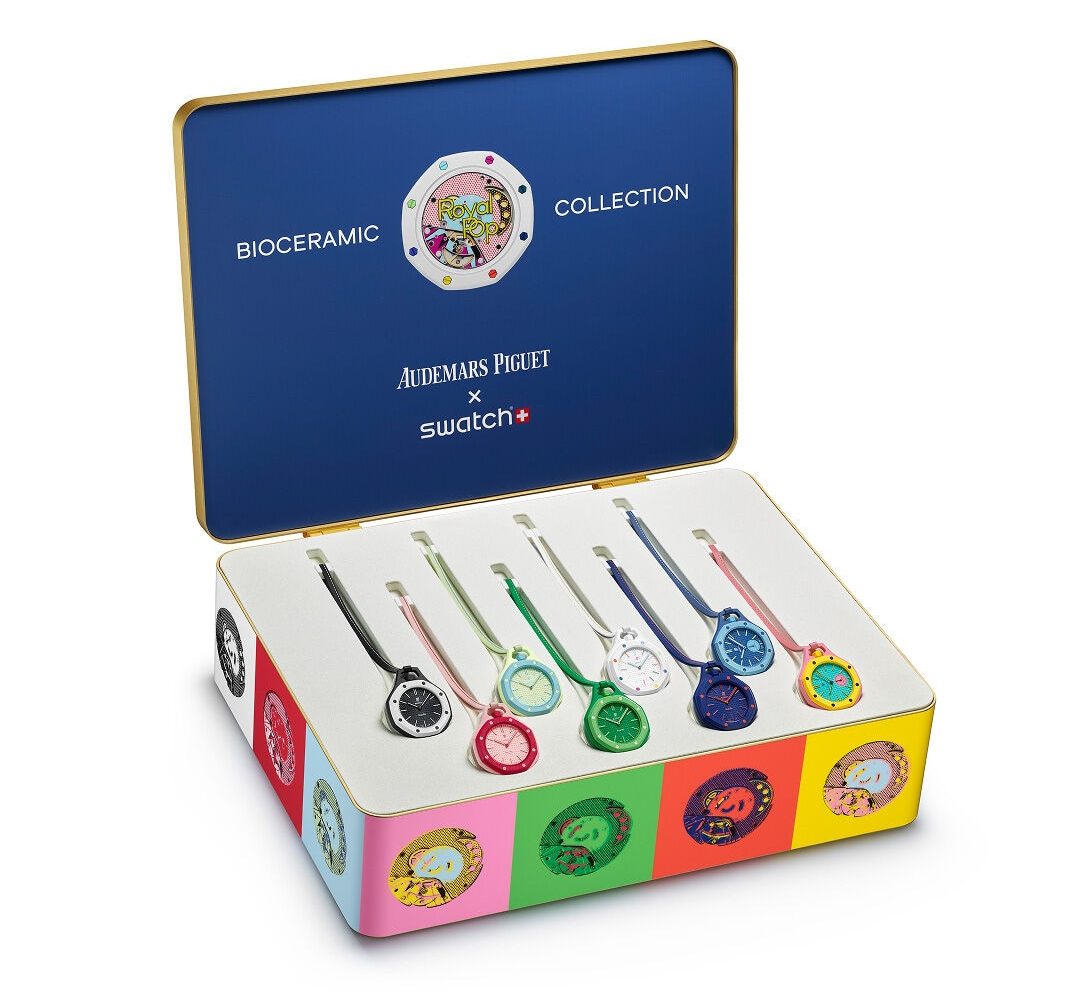
I was a teenager in 1990s Brazil when I got my first Swatch. Simple, cheerful, full of charm. It came with a kit of straps in different colours: red, yellow, electric blue, and swapping them out was half the fun. It felt like wearing a mood. I didn’t know it then, but I was wearing a small revolution on my wrist.
A revolution I think about in terms of culture, design, and art. Yes, art. That’s what this post is about.
Art is my great passion, the kind that shakes you a little, that makes something ordinary suddenly extraordinary. Swatch, it turns out, was always thinking the same way.
A Swiss Watch Saves Itself
In the late 1970s, the Swiss watchmaking industry was in crisis. Japanese brands like Seiko and Citizen flooded the market with cheap quartz watches, and two of Switzerland’s biggest watch companies were near collapse.
The first twelve Swatch models launched on 1 March 1983 in Zurich. Sales went from $3 million in 1984 to $105 million in 1985. The Swiss watch industry was saved by a watch that looked like a toy.
The name carries a double meaning, intentionally so. Swatch contracts “second watch,” a casual extra watch worn like an accessory, but also “Swiss watch,” a proud declaration of origin at a time when Swiss quality needed defending. Both meanings live in the same four letters. Very Swatch.
The World’s Smallest Canvas
Swatch’s romance with art goes back almost to the beginning.
In 1985, just two years after launch, they released their first Art Special, a 140-piece limited edition designed by French artist Kiki Picasso. It sold out immediately. The message was clear: this was not just a watch company.
Then in 1986 came one of the great stories in fashion history. Swatch approached Andy Warhol to design a collection. He declined (how dare! lol) but suggested a young New York artist whose work covered the city’s subway walls: Keith Haring. His four Swatch designs became instant collectibles, cementing the brand’s identity as an art collaborator for good.
My Favourite Swatch Art Watches
I can’t always tell if I’m passionate about the artist and the original work, or the watch that comes from that symbiosis. Maybe both. Here are the ones I keep coming back to.
Swatch × Musée du Louvre, Paris
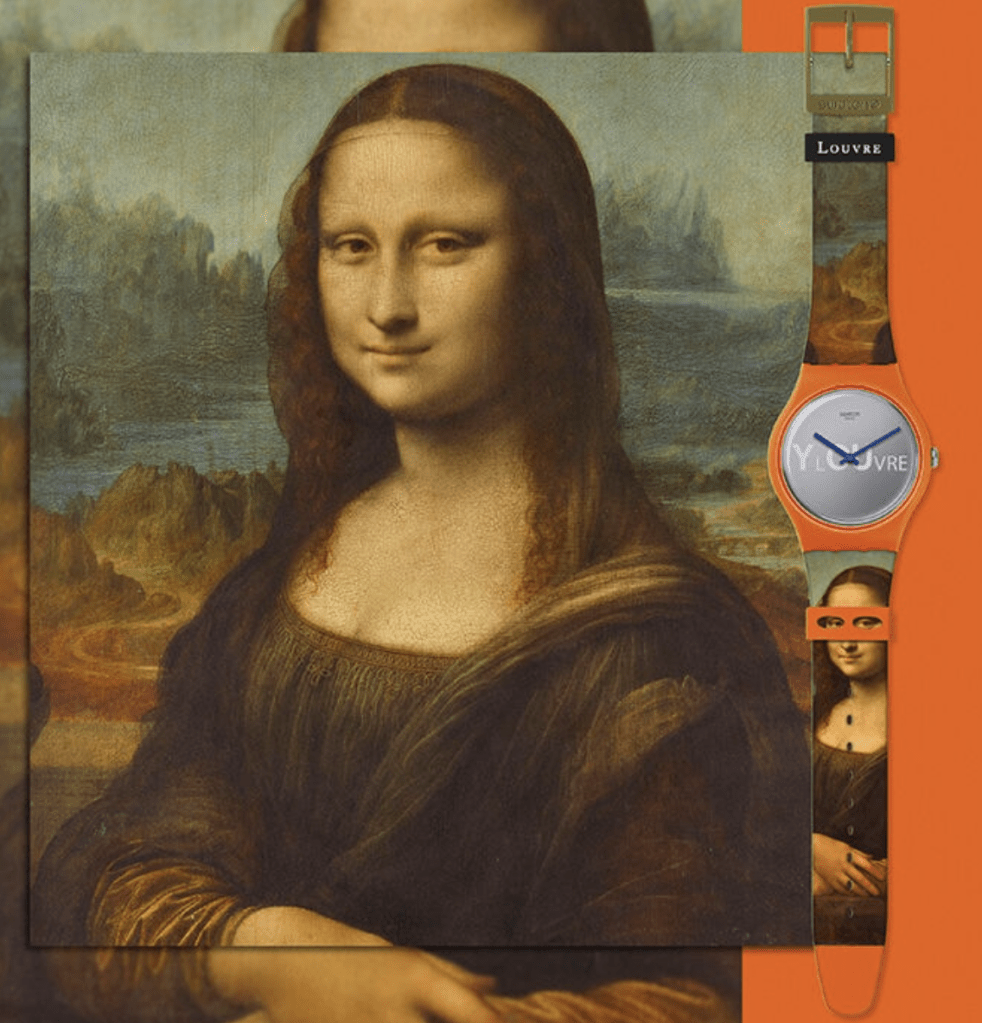
Taking the most visited museum in the world and putting it on a strap: the audacity. The collection drew from Leonardo da Vinci, Delacroix, and others, each given a playful modern twist. Marie de Médicis got blue hair, Henri IV got red glasses.
My favourite is the Lisa Masquée, the Mona Lisa behind an orange carnival mask, still smiling that smile. Irreverent and respectful at once. A tiny detail I love: the buckle sits right where her eyes are, so fastening it makes her look like she’s wearing glasses.
★ Favourite: Lisa Masquée, Mona Lisa by Leonardo da Vinci
Swatch × Centre Pompidou, Paris
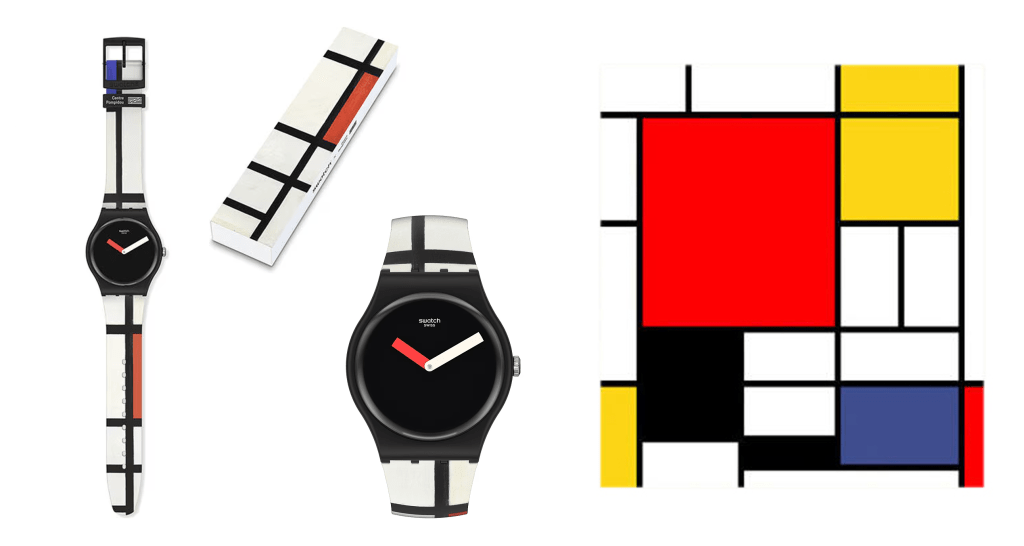
Six watches, six giants of the twentieth century: Frida Kahlo, Modigliani, Delaunay, Kandinsky, and Mondrian. A miniature survey of everything I love.
I’m an unconditional Mondrian fan (I’ve written about him on this blog), so this one was never in doubt. His grids feel like the geometry of joy: precise, contained, and bursting with colour. On the Swatch, those lines flow from the dial down the strap.
★ Favourite: Piet Mondrian, Composition in Red, Blue and White II (1937)
Swatch × Le Gallerie degli Uffizi, Florence
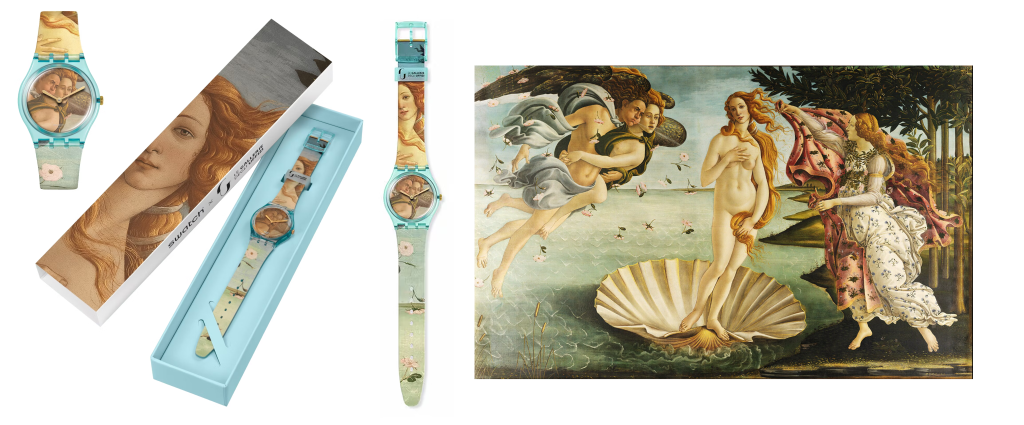
Two Botticellis, one collection: The Birth of Venus and the Allegory of Spring, both hanging in the same room at the Uffizi and now both on your wrist.
The Venus watch is a blue case with a detail from the original: Zephyr and Aura, the wind gods blowing her to shore, faces close together. Pink roses on the strap. One of the most beautiful objects Swatch has made. Those hovering wind gods, right over the hours, I can’t look away.
★ Favourite: Nascita di Venere (The Birth of Venus), Sandro Botticelli, 1484 to 86
Swatch × MoMA, New York, Roy Lichtenstein
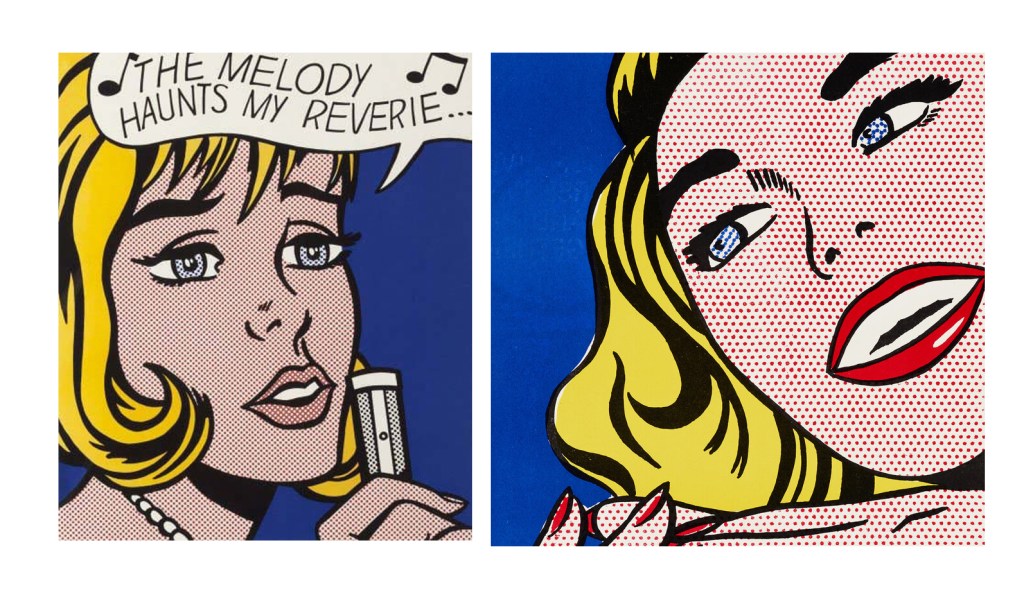
I’m an unconditional Lichtenstein fan. His work makes the world feel simultaneously more serious and more ridiculous, which is honestly how the world actually is. Those Benday dots, speech bubbles, crying women. Not parody. Pure visual intelligence.
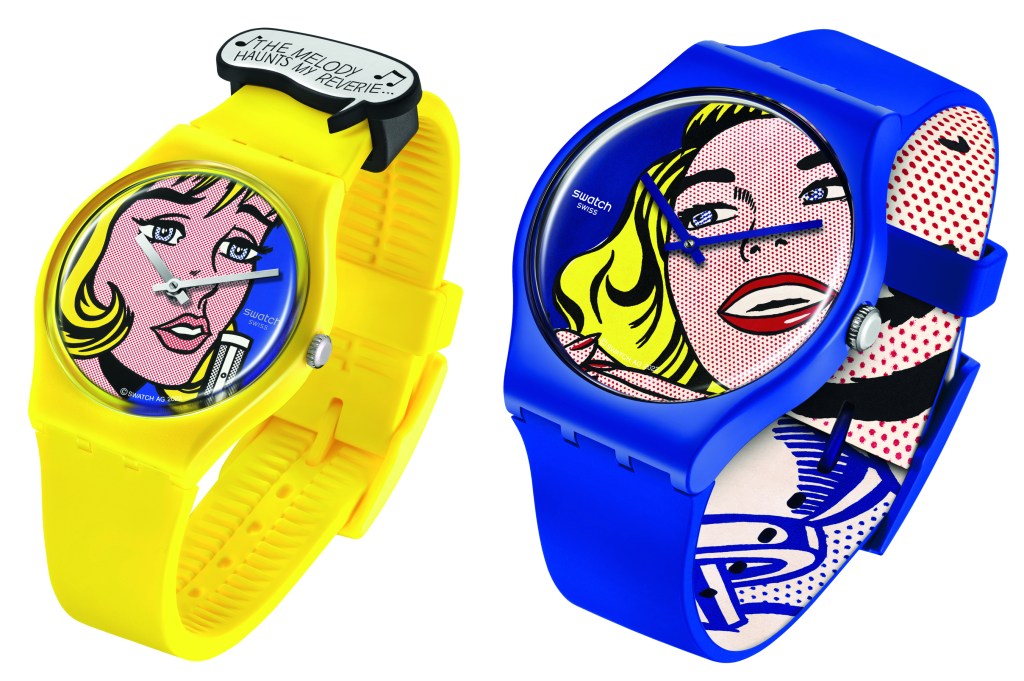
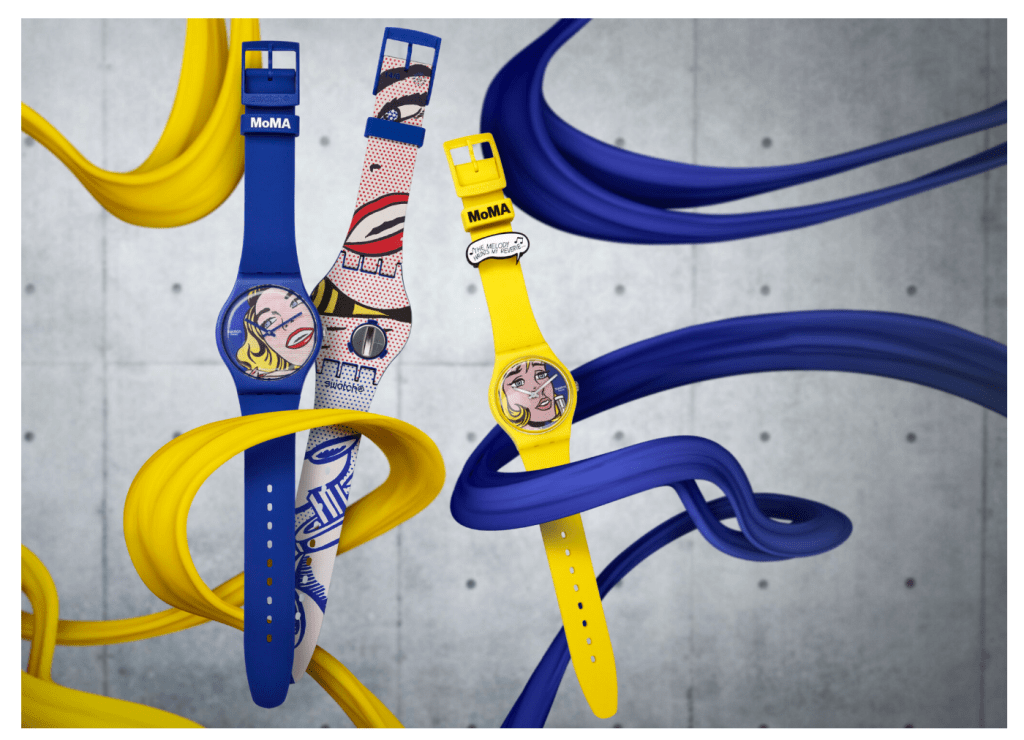
The MoMA collaboration released two watches for his centenary: Girl (1963) on a blue case, and Reverie (1965), full canary yellow, with “The melody haunts my reverie” looping around the strap. Looking at the dial feels like stepping inside a comic strip, and that pointillist effect on the figures? Worth it alone.
★ Favourite: Girl (1963) and Reverie (1965), Roy Lichtenstein
Swatch × René Magritte
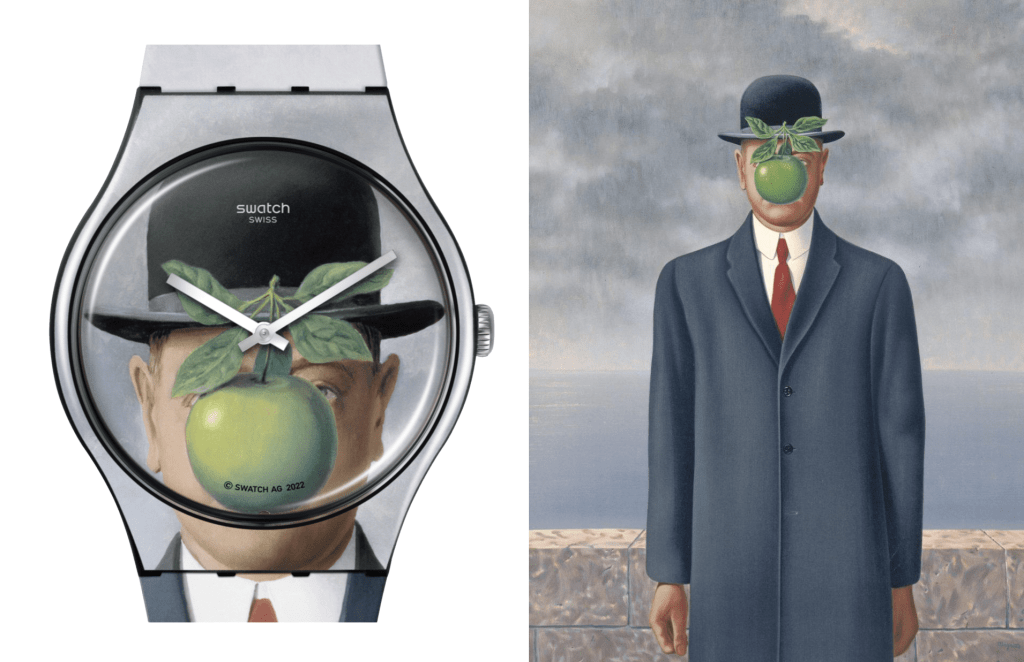
A man in a bowler hat. A green apple where his face should be. The Son of Man (1964) is one of the most iconic images in surrealism, and one of the most quietly philosophical. We never quite see each other’s faces, do we?
The Swatch carries the painting across dial and strap and adds a line of pure Magritte cheek: “Ceci est une Swatch avec une pomme,” a wink at his famous “Ceci n’est pas une pipe.”
Honestly, I like this watch mostly because of a film. The Thomas Crown Affair (1999), with Pierce Brosnan, my eternal crush, follows a billionaire who steals a painting from the Met using a crowd of men in bowler hats as disguise. Pure Magritte on screen. Pierce Brosnan and René Magritte on the same wrist. This watch was always going to be mine.
★ Favourite: Le Fils de l’Homme (The Son of Man, 1964), René Magritte
Swatch × Tate Gallery, London
The 2024 Tate collection brought together seven artists from the gallery’s permanent collection: Turner, Miró, Chagall, Matisse, Louise Bourgeois, and others.
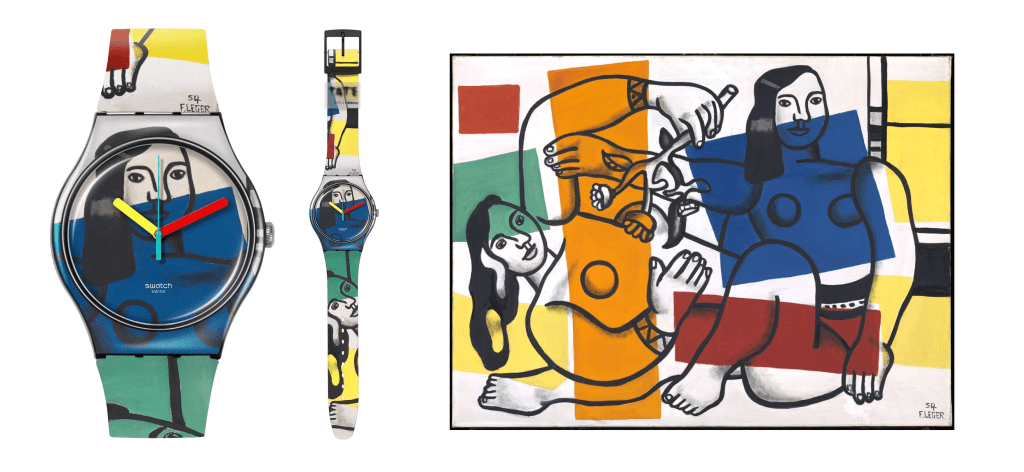
Two stand out for me. Léger’s Two Women Holding Flowers: bold outlines, flat colour, figures that feel architectural, with hands on the watch (yellow, red, green) that look drawn by Léger himself. Then Matisse’s The Snail (1953), one of his great late cut-outs, made in his eighties. He called it “drawing with scissors.” Squares of colour spiralling inward. Pure concentrated happiness on a strap.
★ Favourite: Two Women Holding Flowers, Fernand Léger, and The Snail (1953), Henri Matisse
A Final Thought
Swatch proved that beauty doesn’t require expense, and that a $100 object can carry the same ideas as a museum wall. It saved an industry not by competing on luxury, but by reinventing what a watch could be: a blank canvas, a pop culture statement, an emotional memory for those of us who wore one.
The goal of art is to move our senses, all five of them. That’s where “aesthetic” comes from: the Greek aísthēsis, sense perception. Isn’t it wonderful to look at the time and contemplate a work of art in the same glance? I think so. I really do.

